Tuesday, July 6, 2010

Port city

Yet another city, unrecognizable as one, after the war, heavily rebuilt. It is the major port of Germany and handles a lot of trade since a long long time. Hamburg is also famous for its breads and fish dishes.

The Rathaus of Hamburg

In this church, the part where people congregates for prayers is no longer there.
But this is one of the few churches of Hamburg, which wasn't completely destroyed in the war.

The warehouses that deal with goods from the port


Elbe Tunnel, a 1 km long tunnel, through the bottom of the river bed, that allows passage of vehicles as well, which are lowered and raised by huge lifts.


Unfortunately, the fish take the whole week off, and present themselves in the market only on Sundays, since the past 300 years.

Monday, July 5, 2010

Through Raw History - 2


SS guard Uniform

Having come to Germany, I could not have gone without visiting a concentration camp. Sachsenhausen, in the suburbs of Berlin gave me that opportunity. Almost nothing remains from the period when humanity was lost right in here. And an audio guide can be highly insufficient to make the visitors understand anything close to what people once underwent here. And it was not over after 1945, whereafter, the Enemies of the State of Communist Germany replaced the Jews and POWs of Nazi Germany. Of course, they didn't match the planned torture that the SS exercised in their time, going to the extent of performing uncouth experiments on the Jews.


Potsdam is a city full of old palaces, Sansoucci being one of the most majestic ones. The green and gold of the palace against the blue sky made a wonderful combination that reminded me why I became a fan of the Brazilian flag, before being a fan of their soccer team.
Sanssouci palace

I had to return to Berlin to see some more history. Kaiser Wilhelm Gedächtniskirche (picture above) is in its ruins since the World War. Bullet holes are still visible on it. A hexagonal bell tower and an octagonal worship hall, has been built on either side of it.

A bit more of the wall was there at Berlin Wall Memorial (Gedenkstätte Berliner Mauer). Behind the wall on the East side, the Russians had built a barbed wire fence followed by Guard Posts, anti Vehicle barricades, and then a screen to prevent direct eye contact between people on the two sides. One has to say that these Russians were really really scared.

Brandenburger Tor/Gate

The memorial of the Murdered Jews of Europe is an abstract artwork of differently sized black blocks. We saw it from the bus trip yesterday, but did not have time to go there today. Instead I went to the Reichstag (parliament), where visitors are allowed to enter for free. There I discussed politics with an Israeli woman. When she asked me about my viewpoint on Tamil militants in Sri Lanka, I in my turn, quizzed her about her position, on Palestinians.


The Reichstag (parliament)

The large glass dome of the parliament from inside

The policy makers sit right there


The Meet Inbetween

The lectures were mostly just as they were expected to be - boring. Even the DAAD people knew that. I don't know how much their investments on us would be worth it from their side, but from our side, it was totally worth it.

Most of the students brought the competition to Berlin, in this case trying to show that they had toured better than the rest. So, basically both in the lecture halls and outside, a lot was spoken, but only a few were there to listen.

Of the nursery school of 250 DAAD students, Manisha Miss was the class teacher, and Anuroopa Madam was the principal. Their appearances and their way of controlling us (sometimes with fingers on lips) made the whole setting a wonderful fit for the analogy.
The lectures were held in this university

On day 1, we had a dinner at the Indian Embassy. There we met an embassy official, who is IITK alumnus.

On day 2, just before the match, we had a 1.5 hour whirlpool bus tour, but well guided. The sad part was that there was just one stop nd that too for less than three minutes.

At Aldershof, there were supposed to be some science tours, but it did not stand a chance again Argentina-Germany. The DAAD organizers knew that, and they arranged for its screening. Of course, most of the viewers were Germany supporters. Some don't even understand what an yellow card is, or what offside means, but they still had the germany colours painted on their cheeks. Strangely though, there were some rebels too, who complained that they wanted the science tours. I mean if you don't like football, you can sit quietly too.

In the end there was a Bollywood Dance Party. After the 4-0 drubbing, people were in mood to dance a lot. I stayed aloof. Rather I enjoyed a game or two of fussball (table football, and not the German meaning where fußball, pronounced as fussball stands for normal football).

Anyway, for this whole trip I am extremely grateful to DAAD. However, next day, while leaving I didn't find all the individuals I wanted to thank personally.

Through Raw History - 1

Berlin is all about its recent past. A city largely rebuilt after world war, became the centre stage for the cold war. After the world war, the city administration was taken up by the leading nations of the world, US and USSR among them. Sometime soon, Germany got divided into East and West, and so Berlin too had to be divided so. However it meant that West Berlin became an island in the area of East Germany. Of course there were administrative issues. Now to add to the problems, the communist GDR ruling the East, put up a wall right in the middle of everything. The more dictatorship they tried to force in, the more rules they made the people follow; the more the communists lost the support of the commons. Finally, it all ended with the fall of the wall. And with it fell communism. All this happened just 20 years ago. So most of the moderately old Berliners, saw both the rise and fall of the Berliner Mauer (Berlin wall).


There is a lot of remnants of the wall here and there. A stretch was given over to artists in 1990, has some excellent pieces of art.


The Alexanderplatz tower (pic above) like a pin in the sky, is visible from almost everywhere in the city. It is one of the major squares of the city. Marienkirche (also in pic above) is one of the oldest and the tallest church that survived the World War is also located there. Other attractions of the Alexanderplatz is the Neptune's Fountain. An exhibition on the divide of Berlin, was also temporarily on display.

Berliner Dom

There is a grand museum too, possibly second only to the Louvre. The Grecian architechture is all over the place. It has been done to give an ancient look to a city rebuilt in the past 60 years.

This is either Deutscher Dom (German Cathedral) or the Französischer Dom (French Cathedral), too similar in appearance to distinguish. The Konzerthaus is inbetween the two.

The levelled wall still runs through many streets

Charlie Checkpoint, the US-USSR border in Germany :)

Topographie des terrors, this consists of Gestapo prisons, right under one of the remaining stretches of the Berlin wall. there is also an open-air museum which documents the terrorisms by the Nazi regime.

The above picture is of some important building in east Berlin, but other than the small dome, nothing much is different from the rest of the houses in area. The designs, windows, colours are so very identical, that the whole of east Berlin looks like one big government quarter. Again, communist ideas at work.

I found Berlin to be a very cheap city, -transportation, fooding, lodging (10 euros per night !!!). Paris is I would say at least 3 times costlier. That allowed me to try different food, that included Italian icecream, hot dogs, curry wurst, Doner kebaps and yes- Ostrich sausage. ( One more animal added to the list. :) ) I also had litres of Beck's beer over this 5 day trip.

Down the Rhine to Köln


The Eurail passes / German rail passes allow free rides on the KD Rhine cruise. I took one of these on the way to Berlin for the DAAD meet. The valley from Bingen to Koblenz, is rightfully an UNESCO Heritage site. The Rhine flowing through a not-too-gentle, not-too-steep valley, overlooked by numerous castles dating back from the Medieval period, during the period of feudal lords. Many of them are in their ruins though, but probably that made them more attractive at the moment. We passed the Loreley rock, the narrowest part of the Rhine in its route from Switzerland to North Sea. This steep rock which extends to the river bed, along with the strong flow, is infamous for causing many accidents in the past. There is also a legend of the Loreley maidens, who sat upon this rock and lured passing navigators to their doom with their singing. (Source: Wikipedia, and the guided tour on board)

The river supported heavy traffic both of cargo ships and passenger ships (some looked more like hotels than ships). On either side of the river, there was a train line, again both for goods and passengers. It’s a busy place in the lap of nature.


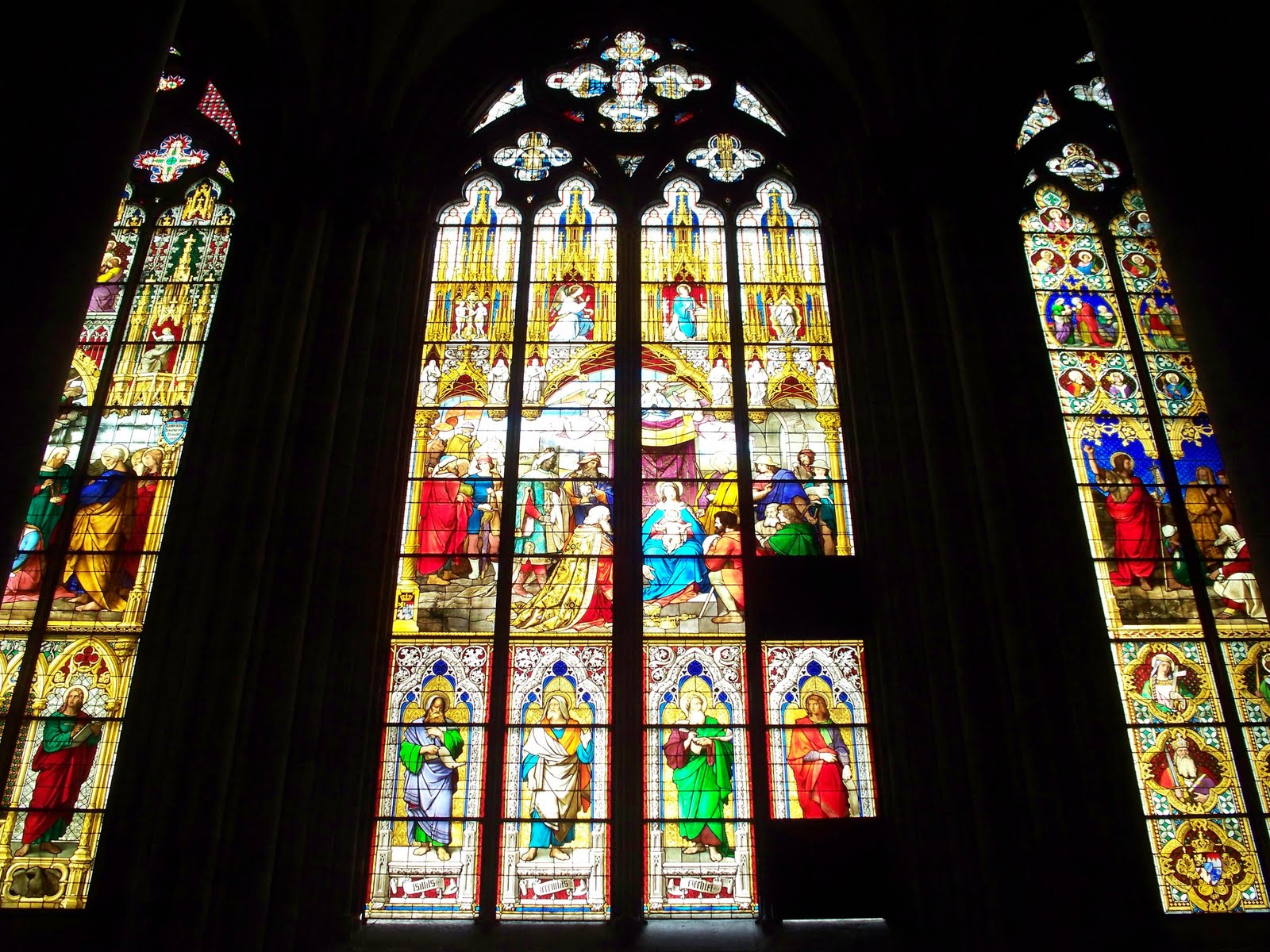
From Koblenz, I switched to a train till Koln. The one and only attraction of Koln its huge cathedral. Losing out in height to Ulm by just 5 metres, but way more grand in appearance…


Wednesday, June 30, 2010

A fairytale finish

Venice is famous for these masks, worn by people during the Carnival of Venice


We reached the main piazza, the San Marco, where there was this majestic church, but there were too many people all around, and we couldn’t hope to get into the church anytime soon. So we went to Lido. That is yet another island. Shape - narrow and long, just like the lanes of Venice. We went to a beach on the Adriatic. Have you ever felt shy for being heavily dressed in public? Not me, before going to this beach. There were lots of people having fun in the water and the sand and suddenly I had this very strange sensation. In our shirts, trousers and bags that we were carrying, we looked extremely out of place.

Rows of beach rooms that can be rented, made the beach look different from the ones I had seen previously. We returned in appropriate attire, and then went for the sea, in turns of two each. The waves weren't very high, making it a safer beach, although life guards were around.


In the evening after a few more boat rides, and some more walking, we retired. Not all together though, since we took shelter in a jetty floating by the grand canal, and someone had to be up to watch over.


Next morning, a prolonged economy lesson from an American, some miscalculations, and some more foolishness led to us reaching the bus stop at 10.45. That's when we learnt that the next bus to the airport is at 11 am. It takes 70 minutes to reach the airport, and the gate for check-in for our flight closes at 12.05. We were afraid even to think of the consequences. Add to that the fact that the three of us combined together had 10 cents shy of 8 euros in cash. (Result of yet another miscalculation)

We ran for a taxi. Asked how much it was to the airport. He said eight five. I asked, “eight point five?”, thinking we might bargain a bit if required. The reply was curt, “Eighty five”. Back in the bus, with the help of co-passengers we tried to convince the driver to reach us to the Treviso airport 10 minutes early. But he refused point blank. Some passengers advised us to inform the airlines, but on hearing that we were travelling by Ryan Air, they shook their heads in dismay because it was very unlikely that they will have a phone, that too with a person to receive it. This was when our hero arrived, taking the form of a bus driver, and promising us to reach our destination in time. Ten minutes later, a Volvo bus, with only three passengers and a hero as the driver was hurling down the highway at 100kmph. At one point, we even overtook the 10.30 bus and so once again the day was saved. The hero didn’t ask for a penny. We could only show our gratitude.

The return flight was particularly wonderful, with the low flying jet going over the Swiss Alps on a sunny day. The snow, the rivers, the valleys and the lakes all combined together to present an unforgettable picture. I could actually identify from the shapes, some of the lakes. After Constance, the landscape became a bit monotonous, and so I dozed off. Sometime down the line, a cabin crew woke me up and made me open the window shutter. I was wondering why, when I looked below to perceive yet another beauty – the Rhine bending its way through the valley.


A fairytale start


The Venice trip was eventful is an understatement. It started with the Ryan air flight, which cost me 10 euros, cost Diptarka 10 euros and a Colgate Toothpaste, cost Chandrasekhar 10 euros and a Deodorant.

The island that is Venice has a shape strikingly similar to that of a fish. After reaching the mouth of the fish at 10.30 pm, when we asked around for budget hotels, people started shaking their heads immediately on hearing the word ‘budget’.

Now who would come to our help but a guy from Karachi, who had just lost his iPhone, whose Credit Card had got damaged, and whose Eurail pass had been disqualified, and who was cool about all of this. He said there was room in the hostel where he was staying for the night (He was a tourist too). He asked us to wait while he went to find his iPhone. Surprisingly he found it, and even more surprisingly he returned for us and took us to the hostel. Ironically, we helped him find his way from his map. But by the time we reached, it was late in the night, and the main door was locked. After some unyielding attitude from us, that involved waking up 3 more people in the middle of the night, we managed to get ourselves in. And then, 3 Indians and a Pakistani chatted late into the night. Before retiring to bed, Yusuf had started using the phrase ‘peace marna’ with ease. So if that gets spread in Karachi, remember who were the ones involved in bringing peace to Pakistan.

A good night’s sleep is what we required and what we had. There were exactly 3 extra beds in Yusuf’s hostel room. Thinking of the odds if you think this is lucky, then read on, because we needed lot more of it on the last day. Anyway more on luck later. Now on Venice.

Let me repeat some well known facts about Venice. Instead of roads they have canals only. All modes of transportation through the canals, - water buses (vaporetti), taxis, gondolas. There were footpaths for pedestrians too, of whom all I guess were tourists. In Venice there are only two categories of people, - tourists and people who serve tourists.

We found lots of Bangladeshis in Venice who make a living here.


The Rialto Bridge

The Grand Canal

Basilica dei Giovanne Paolo.

Some other architechturally good churches are Santa Maria dei Miracoli, S.M. dei Formosa, S.M. dei Allafava of course besides the grandest of them all, the Basilica dei San Marco

Strangely, most churches of Italy have a minimum dressing requirement


We inherited a map from Yusuf too. It had all the lanes recorded. And some lanes they were. Some so narrow that one can’t spread his arms across them. And when you would think you are going to nowhere by that lane, it would suddenly open to a huge square or ‘Piazza,’ with some majestic church capturing your senses. So there were surprises hidden around every corner. It is said that in Venice, getting lost is also a must-have experience. But you don't have to do anything to get that experience, - it is unavoidable.

And everywhere it was picturesque. We started with the famous Rialto Bridge, went to the churches. A ferry from F. Nova took us to Murano, famous for its glass factories. We tasted some real good local pizzas, having pity on vegetarians at the same time. It was also quite some experience having meals sitting down beside the canals, in some obscure corner, our legs dangling from the edge.


Gondolas parked by the canals.

Murano glassware